How Do I Convince a US Brand That My Isolate Is Really THC-Free?
You do not convince a US brand with a “THC-free” label, a supplier’s assurance, or a single screenshot of a lab result. You convince it with a traceable evidence package: a clearly defined product specification, credible third-party lab testing, batch testing records, chain of custody docs, and a careful explanation of what the results can—and cannot—prove.
That distinction matters because “THC-free” can mean different things in marketing, laboratory reporting, and law. A result of “not detected” does not necessarily mean that no THC molecule is present; it means the lab did not detect THC above the method’s reporting limit. And a result for delta-9 THC alone may not answer a buyer’s question about total THC, including THCA.
Legal takeaway: Sell the evidence for a defined specification, not an absolute promise that your product contains zero THC under every test, method, and legal definition.
Start by Defining What “THC-Free” Means
Before sending a sample or negotiating a purchase, ask the brand what it means by “THC-free.” Does it require delta-9 THC to be below a particular threshold? Does it count THCA toward total THC? Does it mean no detectable THC using a specified laboratory method? Or does the brand need the finished product to meet a particular legal limit?

Those are different requirements. An isolate may test below a lab’s quantification limit for delta-9 THC while still having a detectable amount of THCA. A buyer may also set its own internal standard that is stricter than a legal limit. Get the buyer’s specification in writing, including:
- Which cannabinoids must be tested: delta-9 THC, THCA, or both.
- Whether the decision is based on concentration in the isolate or milligrams in the finished container.
- The required units, such as percent by weight, parts per million, or milligrams per serving.
- The acceptable detection or quantification limit.
- Whether the brand requires testing of the isolate, the finished formulation, or both.
This prevents a common problem: a supplier submits a COA that is technically accurate but does not test for the compound, use the units, or meet the reporting limit the buyer actually requires.
Explain Delta-9 THC and Total THC Clearly
For a long time, many hemp compliance conversations focused on delta-9 THC. That is not enough for every buyer or regulatory context. THCA is the acidic precursor that can convert to delta-9 THC when heated. A total-THC calculation commonly estimates potential THC as delta-9 THC plus THCA multiplied by 0.877. The exact reporting rules and en.mercopress applicable test methods should be confirmed for the product and jurisdiction.
In practical terms, a product with low delta-9 THC may still have a meaningful total-THC result if THCA is present. Ask the laboratory to report both compounds and, where appropriate, the calculated total THC. Do not present a delta-9-only result as proof that the product is free of all THC-related compounds.
Legal takeaway: If the buyer’s specification or applicable rule uses total THC, a delta-9-only COA is incomplete evidence.
Build a COA Package a Compliance Team Can Verify
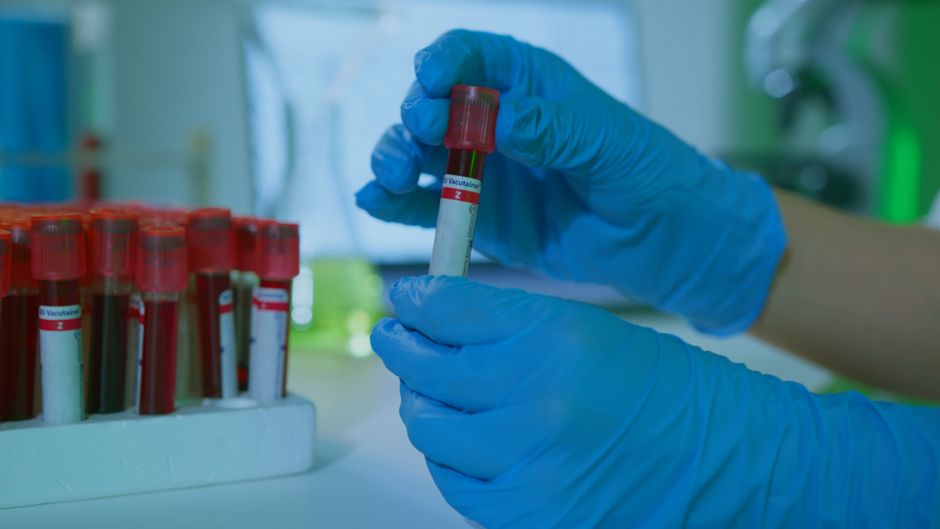
A third-party COA—certificate of analysis—is useful only when the buyer can connect it to the actual material being purchased. A polished PDF is not a substitute for a reliable sample trail. Give the buyer a complete package and make it easy to verify.
What to include in the third-party COA
- Laboratory name, contact details, accreditation status, and report date.
- Sample description that matches the product specification and batch identifier.
- Results for delta-9 THC and THCA, plus total THC when relevant.
- Units and the method’s limit of detection and limit of quantification.
- Sample receipt date, testing date, and any sample-condition notes.
- Report number and a way for the brand to confirm the report directly with the lab.
Be precise about “not detected.” If a result is reported as ND, ask the lab what that means for that specific method. A lab may have detected no analyte above its detection limit, while a result below the quantification limit may be present but not reliably quantified. Do not convert either statement into “absolute zero.”
Provide batch testing records and chain of custody docs
Batch testing records show whether the COA represents the lot being offered—not a previous production run or a hand-selected sample. The paperwork should connect the batch number on the product to the laboratory sample and report. Include the sampling date, sampler identity, lot or batch ID, seal or shipping details where available, and records of any blending, repackaging, or processing after testing.
Chain of custody docs help establish who collected, handled, sealed, shipped, and received the sample. They are especially valuable when the buyer did not choose the sample or when a shipment crosses borders. If the sample was supplied by the producer rather than collected independently, say so. Transparency about sampling is more persuasive than implying an independent collection that did not occur.
Legal takeaway: A strong COA answers “what was in this sample?”; traceable batch records answer “was this the sample from the lot you are buying?”
Use Batch Testing and Public Records to Reduce Buyer Friction
Offer third-party lab testing for each production batch, not just a representative sample from an earlier run. Explain your sampling plan, including how many points are sampled and how the lot is mixed or divided. A buyer may still require its own verification test, but a consistent plan shows that you treat testing as quality control rather than a one-time sales document.
Posting batch lab results online can make review faster. Give each report a stable link, identify the corresponding batch clearly, and keep older records available with dates rather than silently replacing them. Do not publish a COA without checking that it belongs to the product and lot shown on the page. A public library of batch testing records can help a brand’s procurement and compliance teams compare lots before placing an order.
For added confidence, offer a retained sample from the same lot and agree on a procedure for resolving a disagreement between labs. That procedure can specify an independent referee laboratory, a sealed sample, and who pays for retesting. It is better to settle this before a shipment is delayed.
Address the December 11 Deadline and Changing Federal Rules
US hemp requirements are changing, and buyers may ask how a supplier’s product will fit a new or revised federal framework. If a customer refers to a December 11 US hemp rule deadline, ask which statute, agency notice, or compliance milestone it means. A date in a rulemaking calendar, a filing deadline, and an effective date are not interchangeable. Get the exact legal citation and confirm whether the date applies to your ingredient, the finished product, the importer, or the brand.
Do not treat a December 11 deadline as a blanket assurance that every product meeting today’s hemp definition will remain acceptable afterward. Ask the buyer to document its interpretation, and have US regulatory counsel check the current text and effective-date provisions. The USDA (US Department of Agriculture) has a role in hemp production rules, but a finished consumer product can raise separate federal and state questions. A USDA-related production record does not, by itself, establish that a finished product is lawful in every market.
The US Hemp Roundtable and other industry groups can be useful sources for tracking policy developments and explaining industry positions. Still, advocacy materials are not a substitute for the governing text or product-specific legal advice. When a deadline affects a purchase order, confirm it against the official source and record the date checked.
Understand the 0.4 mg Total THC per Container Cap
Some emerging federal hemp-policy discussions and statutory changes refer to a cap of 0.4 milligrams of total THC per container for certain hemp-derived cannabinoid products. Treat that figure carefully: it is not automatically a universal allowance for every hemp product, isolate, state, or product category. The definition of “container,” the covered product types, exclusions, transition period, and effective date all matter. Confirm the current legal text before representing that a product complies.
Also distinguish a concentration result from a per-container amount. A COA may report a percentage or milligrams per gram for the isolate, while a brand needs to know the total milligrams in the final package. The calculation depends on the amount of ingredient used, the formulation, serving size, and the applicable test results. If the finished product is subject to a per-container cap, test or calculate the finished product accordingly and retain the supporting records.
Legal takeaway: A number such as 0.4 mg per container is meaningful only after you confirm that the rule is in effect and that it covers the specific product and container.
Why Flower Shipments Are at the Highest Risk
Flower shipments are generally at higher practical risk than a refined isolate shipment because the plant material is heterogeneous, sampling can be more challenging, and visual inspection may prompt closer scrutiny. Different parts of a lot can produce different results. Flower can also raise questions about THCA, intended use, packaging, and whether the material is being treated as a finished consumer product or an ingredient.
That does not mean an isolate shipment is risk-free. A shipment can still be held or rejected if its documentation is inconsistent, the batch identity is unclear, the COA omits THCA, or the buyer’s rules are stricter than the supplier’s. For either product, match the invoice, packing list, product description, batch number, COA, and shipping documents. Avoid vague descriptions that obscure what the material is.
Make the Buyer’s Review Easy
Send a concise evidence folder with a short cover note, rather than asking a compliance team to piece together a case from email attachments. A practical sequence is:
- Confirm the buyer’s written THC specification and applicable product category.
- Provide the current third-party COA with delta-9 THC, THCA, total THC where relevant, and method limits.
- Attach batch testing records and chain of custody docs that connect the report to the offered lot.
- Provide the sampling plan, retained-sample details, and retest procedure.
- Share batch lab results posted online, if available, with a direct link to the specific lot.
- Identify any unresolved regulatory questions, including the buyer’s interpretation of the December 11 deadline or a 0.4 mg per-container cap.
Companies such as Joy Organics may have their own vendor qualification and product specifications; do not assume one brand’s threshold or documentation checklist applies to another. Ask for the actual written requirements and map each requirement to a document, test result, or open question.
Use Accurate Language in Your Sales Materials
Prefer wording that is specific and supportable, such as: “This batch tested below the laboratory’s stated quantification limit for delta-9 THC and THCA using the methods listed in the attached COA.” Use that statement only if it matches the report. If the test detected a measurable amount, state the result and units rather than calling the material THC-free.
Avoid “zero THC,” “guaranteed THC-free,” and “compliant everywhere” unless you can substantiate those claims under the relevant method, product definition, and market rules. If the buyer wants a “THC-free” marketing claim on its finished product, ask it to approve the wording and evidence standard in writing. The brand—not just the ingredient supplier—needs to consider how a claim may be interpreted by regulators and consumers.
The Bottom Line
To persuade a US brand, make your claim measurable, your testing credible, and your paperwork traceable. Provide a third-party COA that addresses both delta-9 THC and THCA, preserve batch testing records, document chain of custody, and give the buyer a clear route to verify each result. Treat the December 11 deadline and any 0.4 mg total-THC-per-container cap as product- and rule-specific questions to confirm—not shorthand for universal compliance. That is a more credible case than an unsupported promise of “THC-free.”